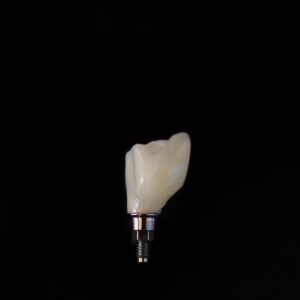
A back tooth chipped right after I entered my 60s.
I thought, “Well, if I go to the dentist, it will be fixed soon.” Then I learned that I had a deep bite. I got a second opinion, had root canal treatment, and decided to get an implant. I paid 449,490 yen for one implant in a back tooth, and in August 2026 the tooth went in. Before I knew it, I had been dealing with my teeth for close to two years. I put the whole record here.
- The Cost of the Implant: What I Actually Paid for One Back Tooth
- How My Tooth Trouble Started
- Bridge or Implant: The 400,000 Yen Decision
- From Surgery Day to Removing the Stitches
- From the Second Surgery to the Fitting
- Root Canal Treatment, Something I Did Not Expect
- What I Noticed with a Toothbrush
- What I Think After Facing My Teeth in My 60s
- Medical Expense Deduction for Implant Costs: How Much Comes Back
The Cost of the Implant: What I Actually Paid for One Back Tooth
I will give the money answer first. For one implant in a back tooth, I paid 449,490 yen at the counter. That is the number on my receipts.
| What I paid | |
|---|---|
| Surgery to place the implant (March 2026) | 221,600 yen |
| Fitting the artificial tooth (August 2026) | 227,890 yen |
| Total | 449,490 yen |
Of this, the part outside insurance was 440,000 yen: 220,000 yen for the surgery and 220,000 yen for the artificial tooth. The rest was for treatment under health insurance on the same days. The first estimate I heard from the clinic was 400,000 yen, and it did not include consumption tax. When you hear an estimate, it is better to check, “Does that amount include tax?”
In October 2026, I searched in Japanese for “implant, cost, back tooth.” Most of the dental clinic sites on the first page said the usual price for one back tooth implant was “300,000 to 500,000 yen.” I was around the middle of that.
On top of this 440,000 yen, I also paid 15,500 yen outside insurance for a CT scan, plus the cost of visits for the second surgery, the temporary tooth, and so on. With all of that, it came to 25 visits and 498,810 yen this year alone. I put the full details of all 25 visits in Part 7 of my series in Japanese. I wrote in Part 3 how much comes back through the medical expense deduction.
How My Tooth Trouble Started
Only in my 60s did I learn that the way I chewed was wrong. I had chewed on one side and kept putting a load on my back teeth. The result was a chipped tooth. At the dentist, I was also diagnosed with a deep bite (kagai kougou), where the upper teeth cover the lower teeth too much. I had no symptoms at all until then.
Bridge or Implant: The 400,000 Yen Decision
What should I do with the chipped back tooth? A bridge, or an implant? Cost, time, risk. I looked into all of it, and then I chose the implant. I went back and forth many times over the cost of 400,000 yen. Still, there was a reason I decided.
From Surgery Day to Removing the Stitches
I was scared on the day of the surgery. It was a quieter time than I had imagined. Even after the anesthetic wore off, it did not hurt as much as I thought. The stitches came out so easily that it felt like a letdown. I think most of the fear was “in my imagination.”
From the Second Surgery to the Fitting
A little over three months after the screw went into the bone, I had the second surgery. The base part (the abutment) was attached, and in August 2026 the artificial tooth went in. The day of the fitting was the first time in this whole series that it hurt.
Root Canal Treatment, Something I Did Not Expect
At the same time as my implant treatment, another tooth needed root canal treatment. Electric disinfection, putting medicine into the tooth, and then watching how it went. My dental treatment did not end with the implant. In your 60s, teeth have problems in several places at the same time.
What I Noticed with a Toothbrush
After the implant, I took a fresh look at how I brush my teeth. What I tried was a subscription toothbrush called the “Miracle Toothbrush” in Japan. I actually used it, and I went all the way to canceling the subscription. I wrote down my honest impressions.
What I Think After Facing My Teeth in My 60s
I always put off taking care of my teeth. I left them alone until they hurt. Only in my 60s did I really feel that teeth are connected to the whole body. Chewing, speaking, the joy of eating. It is all connected. I do not regret spending 450,000 yen on an implant. If anything, I think I decided too late.
Medical Expense Deduction for Implant Costs: How Much Comes Back
An implant counts for the medical expense deduction. Even when it is outside insurance, it counts if the purpose is treatment. How much comes back depends on your total income for that year.
I wrote everything in Part 3: how the amount came about, and the calculation for each level of total income, including the fact that residence tax also goes down. You can ask about it at the tax office for free.

コメント