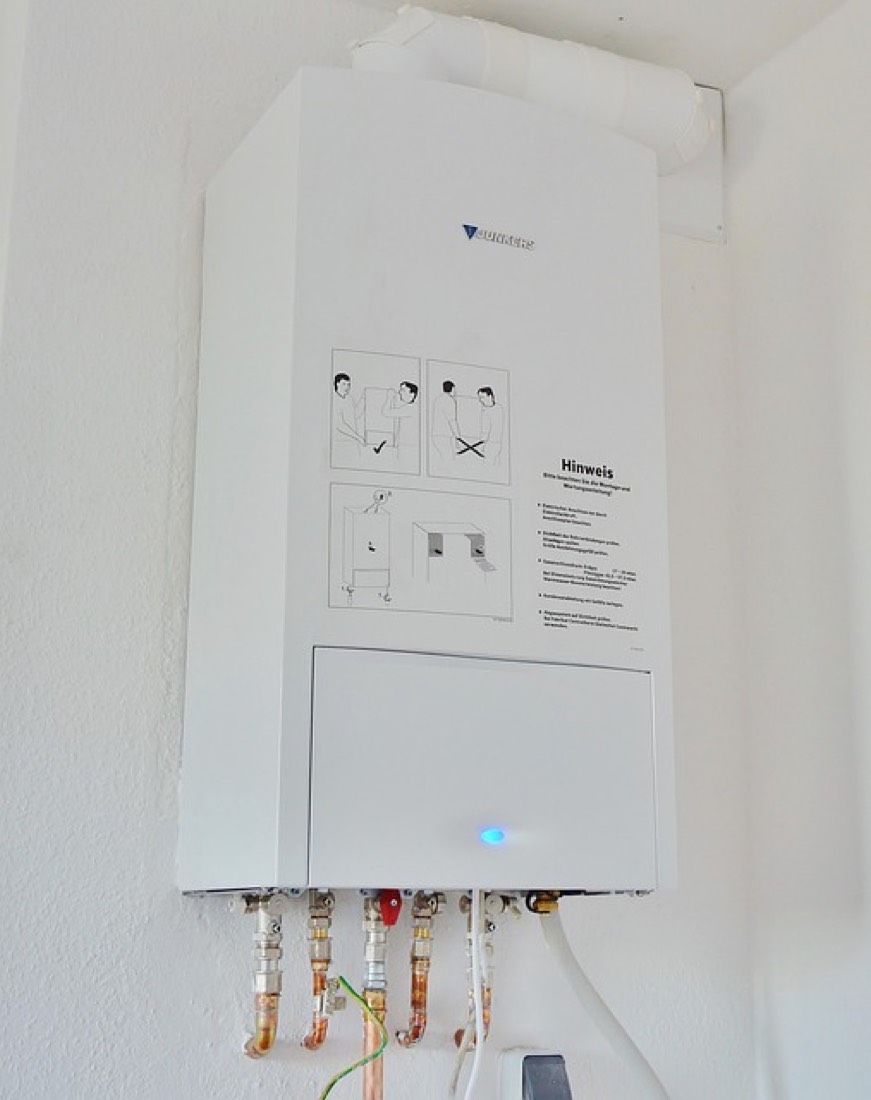
The maker says a water heater dies in 10 years.
The contractors tell me to have it checked early.
But the water heater at my house ran for 24 years.
The difference came from just one thing.
Where it stood.
My water heater was inside the garage. In Japan, the usual place for one is on an outside wall of the house.
That is 2.4 times the 10-year life the maker talks about.
I could push the cost of a replacement 14 years down the road.
In this post, I sort out from my own experience the truth about where a water heater should stand to last long, and what the words of makers and contractors really mean.
- Replacing a water heater costs 70,000 to 510,000 yen, and the type makes a difference of more than three times
- I could still reheat the bath. But the shower would not run
- What shortens the life of a water heater is where it stands. Mine lasted 24 years
- Inside the garage vs bare outdoors: what decides the life of a water heater
- The maker says “10 years,” but that is about the JIS standard
- What about a house where it already stands bare outdoors?
- Know the signs before it breaks
- Do not take the contractor line “it needs an inspection” at face value
- When it breaks, who do I call
- The infrastructure of old age is also “people”
Replacing a water heater costs 70,000 to 510,000 yen, and the type makes a difference of more than three times
I asked a contractor I knew, so mine came in far below the going rate.
But that is a special case.
If you ask in the normal way, you have to be ready for around 200,000 yen.
The price is completely different by type. With the work included, it falls roughly into these three groups.
- EcoCute, an electric heat pump type (370 to 460 L) = 470,000 to 510,000 yen (when switching from gas to electric)
- With reheating for the bath (size 16 to 24) = 130,000 yen to the 150,000 yen range (remote control included)
- Hot water only (size 16 to 24) = around 70,000 yen (no reheating)
Mine was the type with reheating. If you switch from gas to electric, it is EcoCute, and the number gets one more digit. It is the same “water heater replacement,” but a different type can mean a difference of more than three times.
I was 57 at the time.
I was not living on a pension yet, but even so, a sudden expense hurt.
At that time I felt deeply that it matters to “prepare before it breaks.”
The life of a water heater is not the 10 years the maker says. It changes a lot with where it is installed and how it is used.
Catch the signs, and move before it breaks.
That was my preparation so that days without a shower do not come again.
I could still reheat the bath. But the shower would not run
We built the house in June 1992.
In August 2016, something went wrong with the water heater.
It was the middle of summer.
The bath could still be reheated.
I could still soak in the tub.
Only the shower would not run.
It was not fatal.
It was summer, so I could still manage.
Even so, my body felt it first.
“This is the end of its life.”
It had not stopped completely.
But I had the feeling that it had surely “started to break.”
What shortens the life of a water heater is where it stands. Mine lasted 24 years
My water heater ran for 24 years.
Looking back now, that is an unusually long life.
I understood the reason later.
The bathroom was laid out from the side of the garage to the back of it,
and the water heater was installed inside the garage.
Rain did not hit it.
Direct sunlight did not reach it.
The winter freeze did not do much to it either.
It is the same as the outdoor unit of an air conditioner.
A machine left bare outdoors surely has a shorter life.
If it had been outside,
it might have lasted 5 years, 10 at best.
I did not ask for this specially at the design stage.
A floor plan that just happened that way
made a big difference in my later years.
Inside the garage vs bare outdoors: what decides the life of a water heater
| Where it stands | Good points | Bad points | Rough life |
|---|---|---|---|
| Inside the garage (my house) | No rain / no direct sun / small risk of freezing | Some houses cannot do it, depending on the design | 20 years or more is possible |
| Bare outdoors (the usual way) | Any house can do it | Rain, ultraviolet light and frost wear it down fast | The 10 years the maker expects |
My floor plan was just chance.
But a person building a house from now on, or a person who can move the water heater during a renovation, can push a 200,000 yen expense more than 10 years down the road just by thinking about “where it stands.”
The maker says “10 years,” but that is about the JIS standard
The manual of a water heater says, “Designed standard period of use: 10 years.”
I thought it would break after 10 years.
But when I looked into it, that was wrong.
The “designed standard period of use” is the period of safe use set by JIS (Japanese Industrial Standards).
10 years was not its “life.” It was the line that says “safety is guaranteed up to here.”
(Source: the official page of Rinnai on its inspection system for products used for a long time)
Spare parts are also kept for 10 years.
So after 10 years, there are cases where it breaks and cannot be repaired.
But that does not mean it breaks in 10 years.
My 24 years were 2.4 times the safety guarantee period.
If the place where it stands is good, it keeps running for a long time.
- Replacing it in a panic at 10 years → buying a new one while the old one still works = a complete loss
- Taking the sales talk of contractors at face value → inspection fees you did not need
- Leaving it with “I will think about it when it breaks” → the worst case, where it stops in the middle of winter
I want it to last at least 10 years. That is nothing special.
If you keep “where it stands and the signs” in mind, a water heater lasts more than twice as long. I can say that from my own experience.
What about a house where it already stands bare outdoors?
I will be honest.
It is hard to protect a water heater that is already bare outdoors after the fact.
My 24 years were the luck of the original design, the fact that it “sat inside the garage.”
There is no genuine cover that keeps the rain off the water heater body
I searched for a genuine “rain cover that wraps the whole body” from the makers (Noritz and Rinnai), but I could not find one.
The reason is simple.
The body of a water heater is built to be “waterproof,” on the premise that it is installed outdoors.
The makers design it on the premise that “rain will not break it,” so they do not sell a genuine cover.
There is an extra part from the makers called a “piping cover”
Noritz and Rinnai sell an extra part called a “piping cover.” A genuine one usually costs 3,500 to 7,000 yen.
But this covers the piping under the water heater, and the top of the body stays out in the rain.
It is not “a cover that keeps off rain from above.”
Its jobs are “keeping the pipes from freezing” and “making it look better.” Its effect on the life of the body is limited.
If you really need rain protection for the body, ask a contractor
Some people build their own roof over the water heater.
But if the ventilation is wrong, there is a risk of incomplete combustion or fire.
It is not something an amateur should touch.
There are also third-party products called “snow roofs.”
But they are not genuine parts, and the model numbers and sizes they fit are different for each product.
They do not fit everything, so you need to read the product description carefully to see if it fits your own water heater.
If you really want rain protection for the body, the safest way is to ask the shop that sells and installs water heaters “whether a roof can be added later.”
Whether the cost is worth it is another question, but asking usually costs nothing.
Some people say, “I would rather move the whole thing.” Moving it is possible if you ask a specialist, but the cost changes a lot depending on the pipes. First, get an estimate. Realistically, the easiest way is to think about moving it at the time of replacement.
Three things a house without the luck of placement can do
- Watch for the signs of failure (when uneven temperature, low water pressure or an error display shows up, get an estimate)
- Drain the water before winter (you can do it yourself as the manual of the maker says, and it prevents freezing accidents)
- Choose the contractor carefully (find a local electrical and plumbing shop in your town. They are more flexible than big companies.)
My 24 years were “the luck of placement.”
A house without that luck can only make a difference through “watching for the signs” and “choosing the contractor.”
Know the signs before it breaks
Looking back now, there were signs before it broke.
The hot water temperature stopped being steady.
The shower pressure got a little weaker.
Sometimes an error showed on the remote control.
I ignored them, thinking “it still works.”
As a result, it broke at the worst time, with the shower stopping in the middle of summer.
When the signs show up, get an estimate before it breaks.
If it breaks in winter, that is the worst.
I do not even want to imagine a winter life without a bath.
It was summer, so I was still saved.
That was only luck.
Do not take the contractor line “it needs an inspection” at face value
After 10 years, contractors start sending notices like “Time for an inspection” or “How about thinking about a replacement.”
When I looked it up, there seems to be no legal duty to inspect the water heater of a detached house.
A condominium is different. It has shared areas, so the management association needs inspections.
In a detached house, you can judge for yourself.
Inspection is their job, so of course they recommend it.
But it is not “a must.”
I only had the kind of relationship where I asked the local electrical and plumbing shop to “take a look when something bothered me,” and it ran for 24 years.
I use what contractors say as a reference.
But I keep my own eye for judging.
Choosing a contractor after it breaks is too late. Talk it over just once with your wife and children. It is enough to decide, “If the water heater stops, we call this place.”
When it breaks, who do I call
The person I asked for the replacement was not a big company.
He is from the same town, one school year above me.
We went to the same schools from elementary school to high school,
but we were not close enough to call each other best friends.
Still, he was the “local electrical and plumbing shop,” close enough that I knew his face and what kind of person he was.
I helped take the old one off and put the new one on. The water heater was mounted 180 cm above the ground, and it was heavy. We tied it with a belt, lifted it up and installed it.
After the work was done,
he made a point of telling me this.
“Please do not make the price public.
And please do not tell too many people that you bought it from me.”
He is not the type to make too much profit.
If anything, the opposite.
To keep his business going in this town for a long time,
he hated strange rumors more than anything.
The infrastructure of old age is also “people”
That man has helped me with other things before too.
A gas range stand.
A washing machine.
An air conditioner.
(There are three in the house. Two came by mail order, and one came through him.)
What I learned by comparing
is that there is a difference bigger than the price.
That is,
“Who can I ask for help when it breaks?”
If the air conditioner stops, I can put up with it.
But when the bath stops, the dignity of daily life stops.
When a water heater breaks, you cannot judge calmly in that moment.
In winter, not being able to take a bath can be a matter of life and death.
And even in summer,
living with a body sticky with sweat and skin oil,
without even being able to take a shower,
takes away more energy than you would think.
In those 3 days, I learned with my own body what it means when the infrastructure breaks.
If that comes in old age, I will not be able to move on my own anymore.
When did you replace the water heater in your house?
Will you replace it after it breaks completely,
when neither hot water nor the shower comes out?
Or will you prepare at the moment you feel uneasy,
“What if this had been the middle of winter…”
“What if this had been the middle of summer, and I could not wash off my sticky body…”?
Related stories on this blog: Wasteful Spending in Retirement: 3 Purchases I Regret and 2 I Do Not / Earthquake Insurance in Japan: I Know I Should Cancel, but I Cannot

コメント