Three Japanese Pitchers, One Word: It Slips
Koji Uehara. Hisashi Iwakuma. Shohei Ohtani.
Three pitchers who went from Japan to MLB. Different eras, different styles.
But all three said the same thing about the American ball.
It slips.
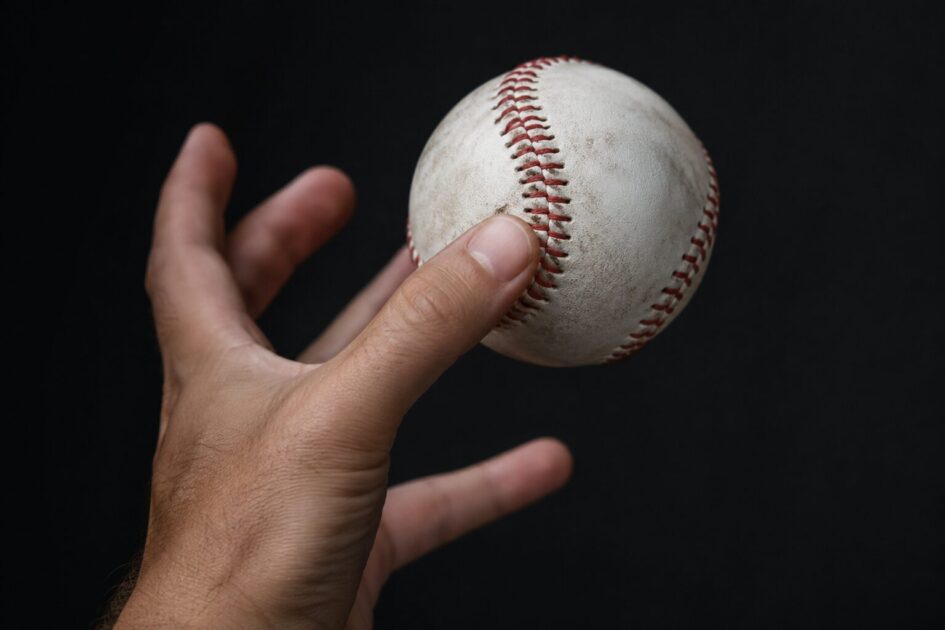
Same sport. Same rules. But the ball in the hand feels completely different.
In that one word, there is a whole world that numbers cannot show.
A short note for readers outside Japan: NPB, the Japanese pro league, uses its own official ball. Compared to that ball, the MLB ball is slightly bigger and more slippery. Japanese pitchers grow up with a ball that grips well. Then they cross the ocean, and the ball does not stick to their fingers anymore.
The Fingers Do Not Catch on the Ball
The real problem is not size or weight.
It is the feeling that the fingers do not catch on the ball.
At the moment of release, the fingertips should catch the seams and the leather. With the MLB ball, they do not. The ball slips out. Just a tiny difference. But that tiny difference changes the spin, the control, and even the body of the pitcher.
Three Answers to the Same Slippery Ball
Uehara: the ball broke his body.
After moving to MLB, Uehara said the ball was slippery, so he had no choice but to grip it harder. That harder grip put stress on his elbow. He also said it led to his injury. Slipping is not just a technical problem. The body itself changes. The environment can change a pitcher, his form, his muscles, even the length of his career.
Iwakuma: he understood the difference and adapted.
Iwakuma also felt it. The ball slipped, and he could not get speed on it. But he accepted the ball as it was. A slippery ball creates a different kind of movement. Different seams, different air resistance, different spin. He did not treat slipping as a weakness. He turned the movement that comes because the ball slips into a weapon. Do not fight the difference. Understand it and use it. That is what adapting really means.
Ohtani: he turned the difference into a weapon.
In his first MLB year, Ohtani also felt the ball did not stay in his hand. But he did not stop at getting used to it. Grip, finger position, form, spin. He rebuilt everything on the assumption that the ball slips. He did not try to erase the difference. He used it. And his pitches became more refined, not less.
Do not change the environment. Change yourself.
The ball also tells you something about each country. Japanese baseball is built on control and strategy. American baseball is built on power and speed. The character of the ball matches the thinking of the game. When the tool is different, the way of fighting is different.
Slipping Is Not Only About Baseball
A ball slips. Just that. And because of that, one man breaks, one man adapts, one man evolves.
When I think about it, this is not only a baseball story.
At work, too, there are moments when your old way stops working. A new job. A new department. The tools change. The rules change. The air changes. What you built for years does not carry over.
That same slipping feeling. Nothing feels solid in your hands. You do not know where to put your strength.
Some people grip harder and break their bodies. Some people accept the new environment and change their style. And some people turn the difference itself into a weapon.
I spent nearly 40 years on factory floors. When the site changed, the machines and the materials changed too. We were supposed to make the same product, but my hands could not get the feel of it at all. That strange feeling was exactly the slippery ball.
At first I pushed with force. It did not last. In the end, I had to learn the habits of the new place and fit my hands to it.
Uehara broke. Iwakuma adapted. Ohtani made it a weapon. Three men, three answers. But they share one thing. They did not run from the strange feeling. They watched it, and they kept correcting.
You cannot change the environment. But you can change how you use yourself.
When you feel something slipping, do not ignore it. That strange feeling is the entrance to change. Whether you notice it or not changes what comes next. The slippery ball taught me that.
Related: Shohei Ohtani Started Spitting on the Field. I Am Just Disappointed.


コメント