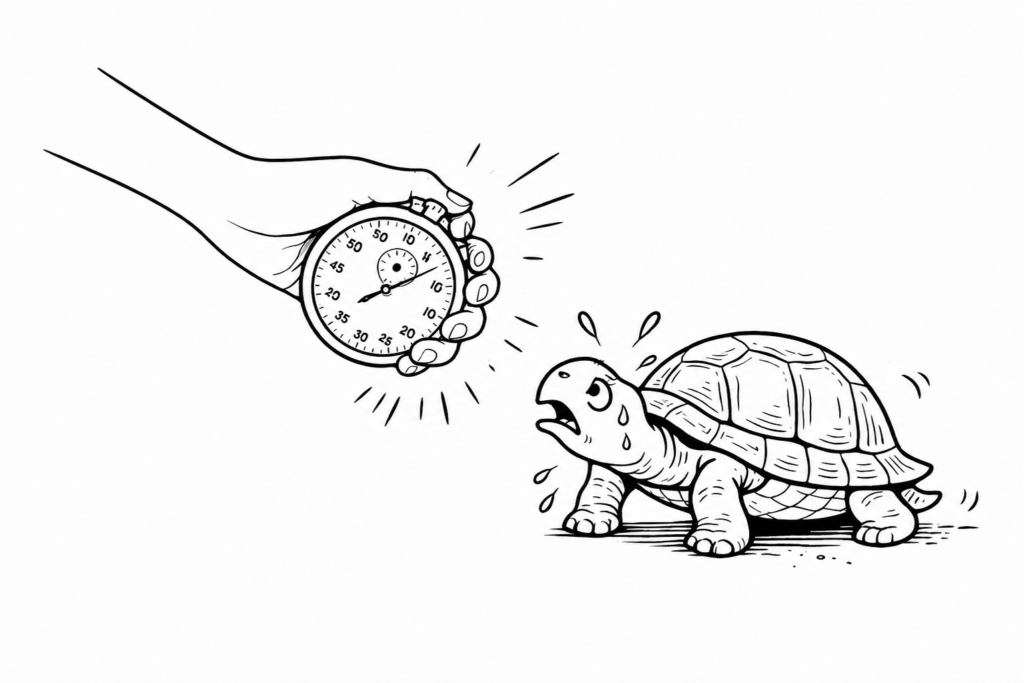
I took the minutes for our neighborhood association four times. All four times, my notes could not keep up. Every time, I finished them later by checking with other people. I felt bad about it. But I also thought I had somehow gotten them done.
The other day, someone else took over the job, and I sat next to that person and watched them write. The talk moved fast, jumping from one thing to the next, but their hand never stopped. As soon as a word was spoken, it was already on the page.
What a talent this person has, I thought. I meant it honestly.
And at the same time, some words from 40 years ago came back to me.
What the Production Manager Said to Me
When I was close to retirement age, there was a period when I was assigned to the visual inspection floor. I was nearsighted, and my eyes had also aged. Checking small scratches and uneven color by eye was, to be honest, hard.
At that time, the production manager said something to me.
He said, “You are a seishain. If you cannot do at least this much, that is a problem. We pay you a proper salary, after all.” A seishain is a permanent, regular employee — a status that in Japan carries an unspoken expectation that you can handle anything.
I thought, what? Nearsighted, aging eyes, and I am supposed to inspect?
If he was going to say that, this is what I wanted to say back.
“Then run 100 meters in 10 seconds, seishain!”
Because you get a salary, you are supposed to be able to do anything — that logic is strange, is it not?
This Is What Visual Inspection Really Is
Visual inspection is a job where a human eye judges good from bad. It is not done by a machine. There are standards, but the results vary from person to person. That variation cannot be avoided. It is built into the work.
And even when there is a scratch on the surface, in many cases the function is completely fine. A scratch, and it still works. Uneven color, and it does not break. That is the nature of the work.
And yet, with one line — “you are a seishain” — that gets turned into a question of one individual and their ability.
This shifts the issue. It takes a failure of the organization and blames one person for a lack of effort.
Who Hired That Person in the First Place
There is one more thing I want to say.
If you are going to say “a person like that is no good,” then who hired that person in the first place?
Who decided the assignment? Who put a nearsighted man with aging eyes on the visual inspection floor? The responsibility points in exactly the wrong direction.
A manager who only looks at numbers judges people by whether they are useful or not. People who have never once stood on the floor are the most likely to use those words without a second thought.
Back to the Note-Taking
Let me go back to the neighborhood association minutes.
Watching how fast that person next to me wrote, I noticed something. That person is like a stenographer. They write down the words as they hear them. They sort out the meaning later. That person is able to do that.
I am different. While I listen, I start to think, “What is the intent behind this remark?” “Where does it connect?” So my hand stops.
It is the nature of a man who spent 40 years doing naze-naze bunseki, the “five whys” — asking why over and over until you reach the root cause. I cannot move on to the next thing without getting to the bottom of the cause. It has become part of me.
I know I should just take notes with an empty mind. But that, for me, is something I will never be able to do.
An Organization That Ignores Tekizai-Tekisho Breaks People
Being suited or not suited to something is not a flaw. Tekizai-tekisho means putting the right person in the right place.
Having something you are bad at does not mean you are a person who cannot do things. It means you are simply in a place that does not fit you.
An organization that ignores this and says “you are a seishain” is looking at people as tools. When the tool does not work to spec, the organization gets angry. That is the kind of place it is.
A weakness and a strength usually come from the same place. A person who thinks too much is good at sorting things out. A person who cannot write fast is trying to understand deeply.
Putting that in a place where it can be used — that is supposed to be the job of the organization.
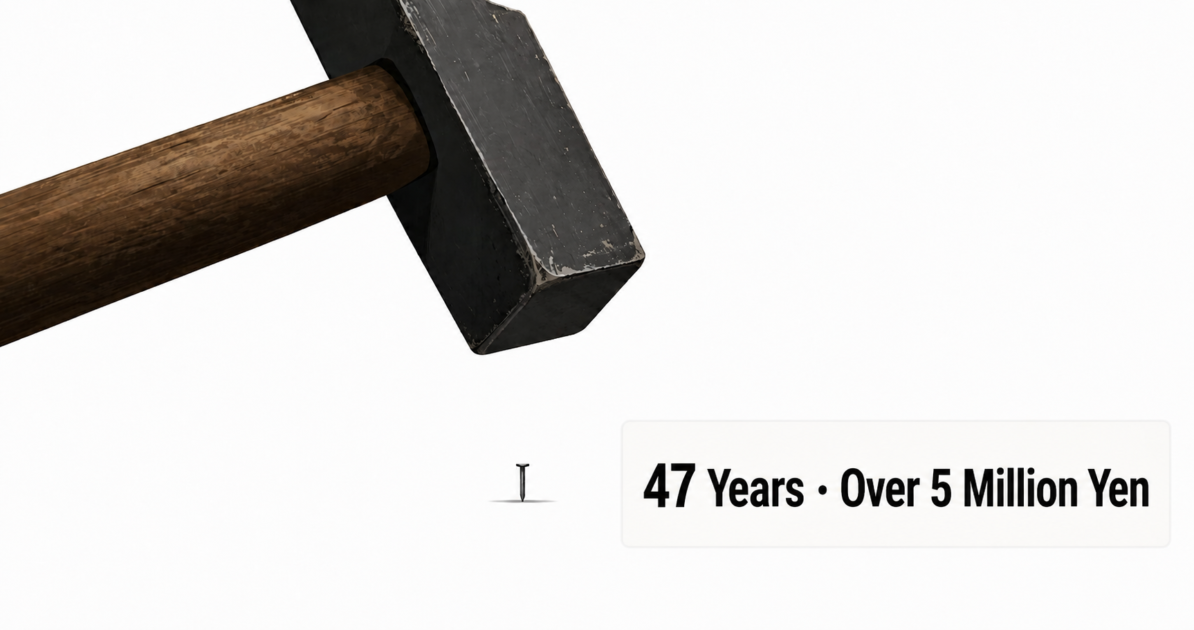
It Took Me More Than 40 Years to Notice
Now in my 60s, I feel like I have finally made peace with the things I am bad at.
Maybe it is late. But I think it is better than never noticing.
And even now I think about it. Back then, I should have said this to the production manager.
“If you tell a nearsighted man with aging eyes to inspect, that is the same as telling someone to run 100 meters in 10 seconds.”
I could not say it. Back then, I still thought of the things I was bad at as flaws.
But now I can say it.
A weakness is not a flaw. I was just put in the wrong place. And it took me more than 40 years to notice that.
コメント