This sound put a spell on me.
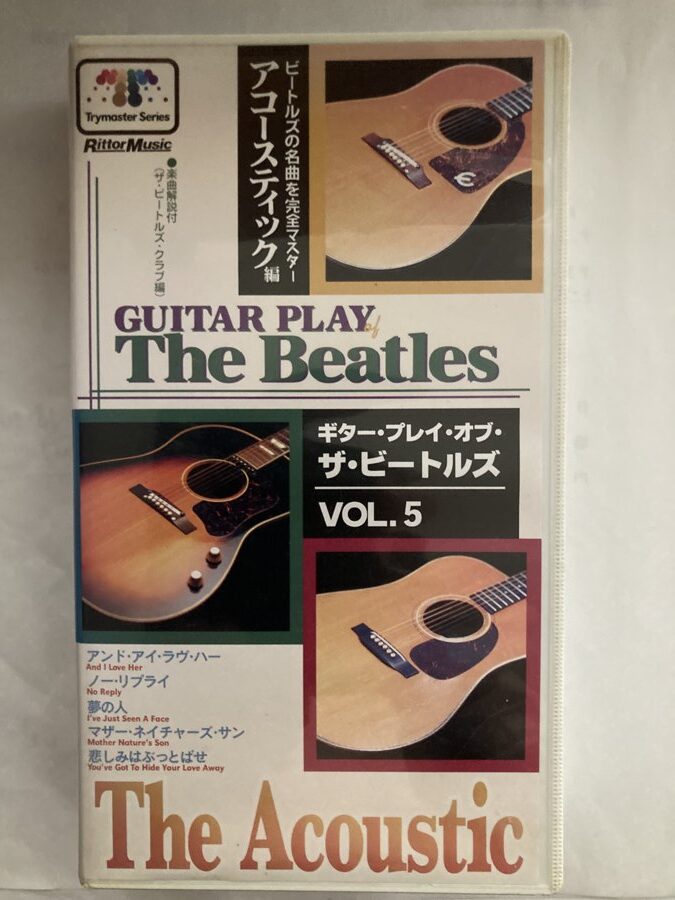
It was an instructional video from Rittor Music, the Trymaster series. The chord strokes of a Gibson J-160E ringing out in “No Reply”. The playing of the guitarist Kiyoshi Tsuchiya was wonderful, both in sound and in technique.
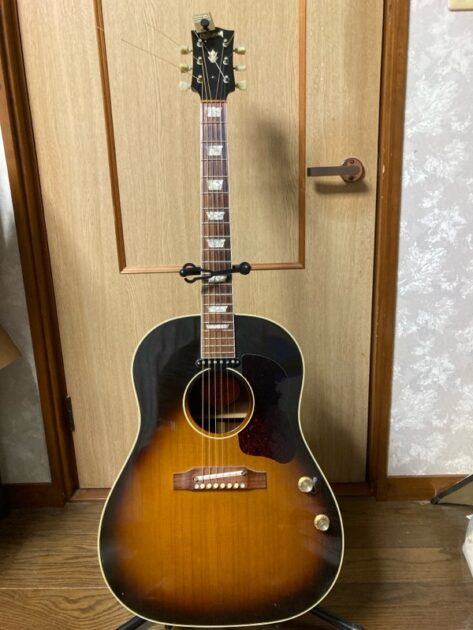
The Gibson J-160E is known as the guitar that John Lennon of the Beatles used. I had that longing in me too, and I got hold of one made in 1997. But the first time I played it, a thought came to me. This is not “that sound” I heard on the CD.
- 23 Years Ago I Was Writing the Same Thing
- Is the J-160E Sound of the Beatles Processed?
- How Different My 1997 J-160E Is From the 1960s Ones
- I Tried 9 Kinds of Strings and Settled on Martin 80/20 Bronze
- I Tried a Fat Finger Weight on the Headstock
- Playing Music Into the Guitar With a Contact Speaker
- In the End There Is No Right Answer, But I Can Get Closer
23 Years Ago I Was Writing the Same Thing
On a guitar message board, the post I wrote myself 23 years ago is still there. I will keep the name out of it.
I bought a J-160E (serial number withheld) on May 24, 2002, used but in almost new condition. It was made in July 1997. I bought the J-160E because I longed for the sound in the chorus part of No Reply on the Beatles Trymaster series No/5. I have tried all kinds of things but that sound does not come out.
March 30, 2003
The next day, I went on like this.
I want to try changing the saddle to ceramic. I have no money so I plan to do the change in the middle of April. I have no knowledge about strings so please teach me.
March 31, 2003
23 years have passed, and I am still doing the same thing.
The man who wrote back then that he had no knowledge about strings went on to try 9 kinds of strings over the following years. And now I have settled on one, and I have not changed them for 2 years.
What I Was Taught on That Message Board
Back then, someone who knew the subject answered me. He said he owned 3 J-160E guitars. If I put what he taught me into my own words, it comes out like this.
- Even if you change the strings, you will not get exactly the same sound
- Nickel strings suit this box better, because this guitar is weak against strong string tension
- On the newer ones, the material of the saddle is different. When he changed it to ceramic, it came a lot closer
- The bracing inside, the metal plate used for grounding, the material of the nut. There are several differences in how it is built compared to the old ones
- Play it hard. As he kept doing that, even a newer one came closer to the sound of an old one
The reason I wrote the next day that I wanted to change the saddle to ceramic was that I had received this advice.
23 years ago, that person took the trouble to teach me.
What bothered me most were the chord strokes in “No Reply”. My sound is close, but something is off. Depth, hardness, the feeling of the air. Something is missing. When I watch live footage of the Beatles, John seems to be hitting near the bridge, hard, with a stiff tortoiseshell pick.
Is the J-160E Sound of the Beatles Processed?
The sound of the Beatles that we hear on CD or on record is a sound that was recorded and processed in a studio. John and George sometimes plugged the J-160E into an amp and treated it like an electric guitar.
But it is said that in the recordings they often picked up the acoustic sound with a microphone. Then EQ correction and a compressor were applied to it, and the sound also changes with the distance and the angle of the microphone.
So it may be only natural that the sound I play without an amp is different.
This is my sound.
I played the chord strokes of “No Reply” on a Gibson J-160E made in 1997.
I did not practice. I recorded it in one take. The strings are thin ones. Extra light, I believe. I have not changed them for 2 years.
How Different My 1997 J-160E Is From the 1960s Ones
Between my 1997 model and the ones from the 1960s that the Beatles used, there are differences like these.
- The top is 3-ply laminate, then and now. This is not cutting corners. It was done on purpose so that it does not feed back when played through an amp
- The bracing inside is ladder bracing, unlike other Gibson acoustic guitars. This also affects how the sound comes out
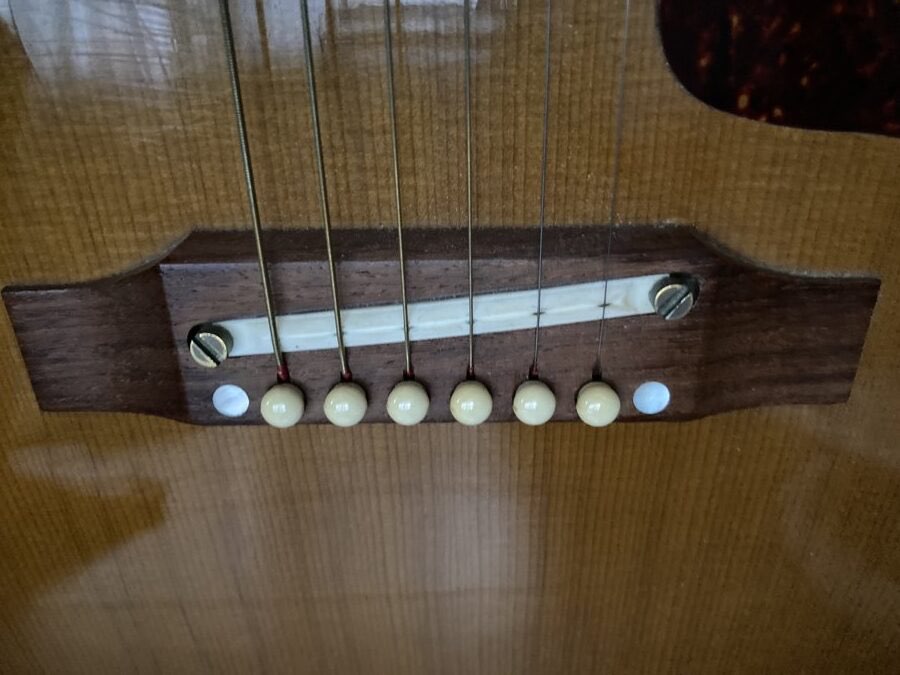
- The material of the saddle, the thin part on top of the bridge that the strings sit on. Some of the 1960s ones have a ceramic saddle. The bridge itself was rosewood back then too
- The shape of the tuners is also different
So that sound is made by the individual differences of the guitar plus the recording technique plus the playing environment, all tangled together.
What I paid the most attention to was the ceramic saddle used back then. My guitar originally had a ceramic-like material on it, but it clearly felt different from real ceramic. So I made up my mind and changed it to a ceramic saddle. I called the shop where I bought the guitar and had one ordered. It was 12,800 yen. It came cash on delivery, and I put it on myself. I still have the original saddle I took off.
It is subtle, but I felt the core of the sound really did change. A little harder, with a clearer attack. It felt like I had taken one step closer to that ringing chord sound of that era.
And lately I have come to think this too. Getting the same sound as the 1960s ones that the Beatles used is impossible after all. The way it was made is different, and the materials are different. Part of me has given up.
Even so, there really are moments when I meet a sound that is close. For example, the chord progression where the singing starts in “A Hard Day’s Night”. G to C to G to F to G, and the first G chord in that flow. (The big chord that rings at the very start of the song is not G. Harrison himself explained years later that it was G played over F.) The D note and the G note that ring on open strings come out with quite a close feeling of air on my J-160E too. It is not a full reproduction, but at odd moments that ringing sound and the sound of that era come back.
That first G chord.
A note about how the J-160E is built. The ladder bracing was designed that way from the start as a countermeasure against feedback when played through an amp. It went on sale in 1954, a guitar built on the assumption that it would be used with electricity. But the top became 3-ply laminate only from 1955. In 1954, the first year, the top was solid wood. It is also true that ceramic was used on the adjustable saddle of the bridge, and that is said to be one reason for the ringing sound heard on the records of the Beatles. The guitars made in 1969 have a wooden saddle. (I could not confirm in the documents of Gibson in which year it changed.) (I checked this part again after writing the article. August 2026.)
I Tried 9 Kinds of Strings and Settled on Martin 80/20 Bronze
Change the strings and the sound changes. That was a fact.
Over 22 years I have gone through 9 kinds on 2 guitars. All the dates are left in my ledger.
Here I will write only the conclusion. In the end I settled on Martin 80/20 bronze. I like them better after they have been used a little and the harsh brightness has worn off, rather than brand new. It is a bad way to put it, but when the strings are dead, the sound of the box of the guitar comes forward more.
One more thing. This box was built on the assumption that it would be played through an amp. The P-90 on the J-160E is a pickup that uses a magnet. With the bronze of acoustic strings, which is a copper alloy, the wound strings put out less, and the volume of each string does not come out even. That is why the old used ones you find have been strung with nickel strings. I could not find any document in which Gibson itself says it ships them with nickel strings.
That said, the electric parts of my J-160E have been dead for 9 years, and it makes no sound through an amp.
I Tried a Fat Finger Weight on the Headstock
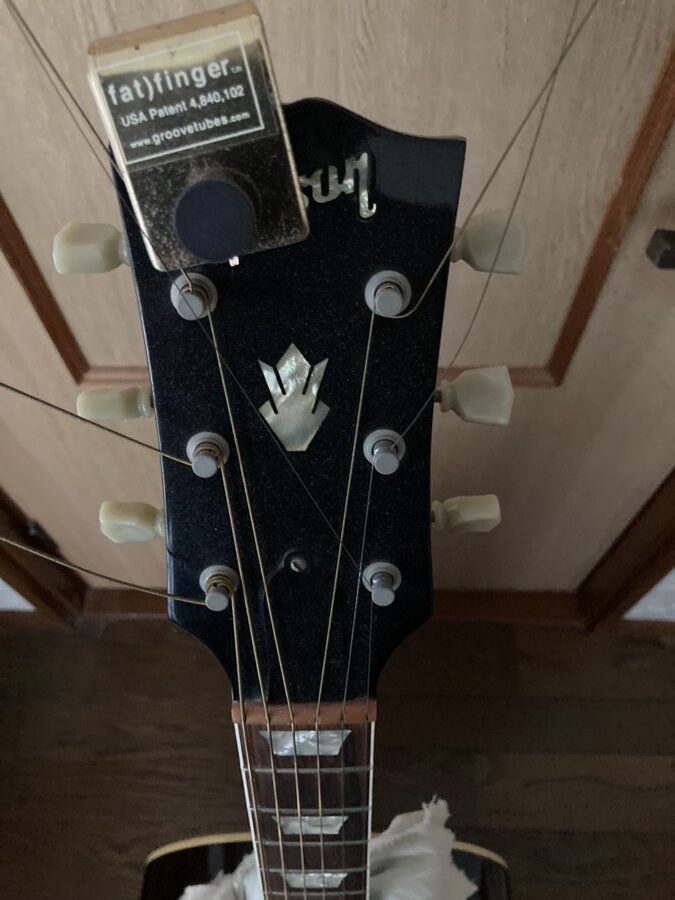
I also tried a small metal weight called a fat finger. It is a tool that clamps onto the headstock of the guitar, the top part where the tuners are, and it is supposed to steady the vibration of the strings and make the sustain longer.
This was surprisingly effective. Especially when strumming open chords, the grain of the sound got firmer and the whole thing settled down.
Lately I think this too.
A clip-on tuning meter is the same thing in the sense that it clamps onto the headstock and adds weight.
When I play with it left on, I somehow feel the sound settles down.
I did not measure it. That is only how it feels to me.
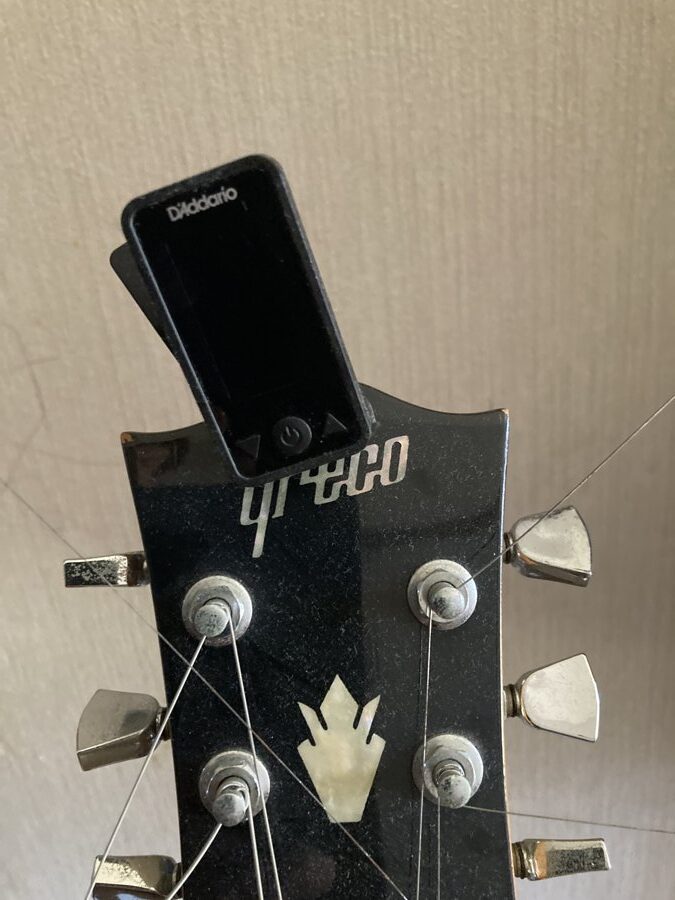
Mine is made by Groove Tubes, and that is stamped on it, as you can see in the photo. The products of this company disappeared from the market once.
But you can still get them. The brand became part of Fender, and they are sold under the name Fender FATFINGER. The one for guitar is 95g and 3,300 yen. The size and the weight are the same as before, and what changed is only the logo and the color of the metal fittings, they say.
Playing Music Into the Guitar With a Contact Speaker
I am also trying a slightly odd method. Using a contact speaker with a suction cup, I send Beatles songs into the guitar as direct vibration. The idea is that by letting the guitar listen to music, so to speak, the wood is aged and comes to ring more easily.
What I used is a ceramic speaker called CEMI, from a Japanese company called Sanei House. I bought it in March 2007. It works by vibrating the object it is stuck to in order to make sound, and it does not use a magnet. It seems you cannot get it now.
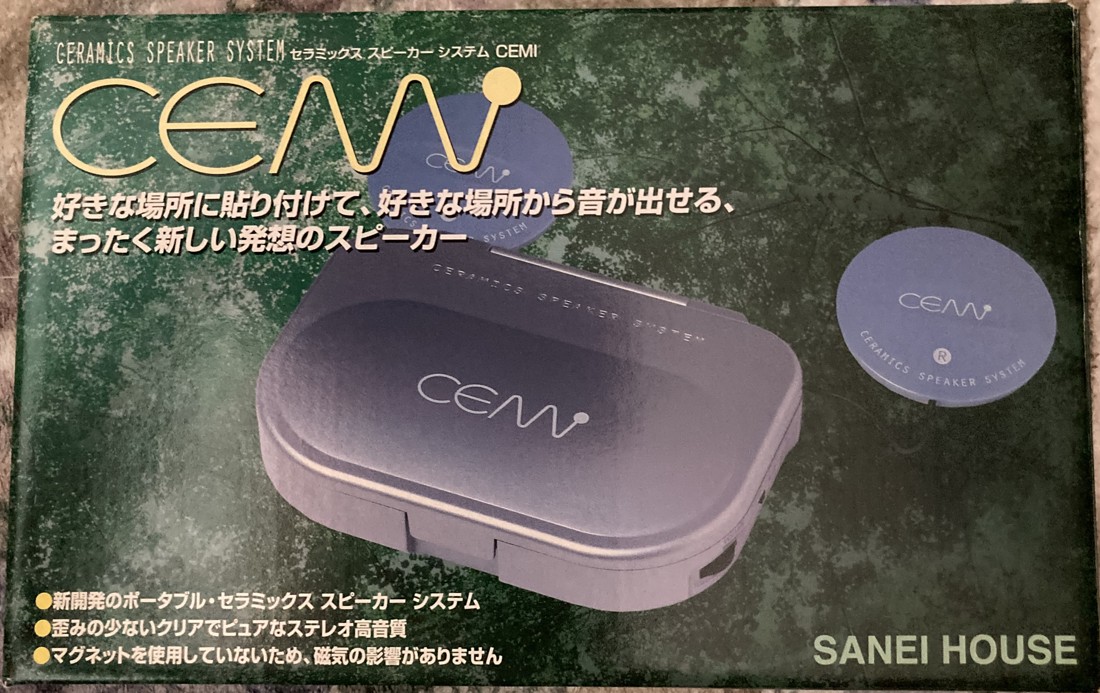
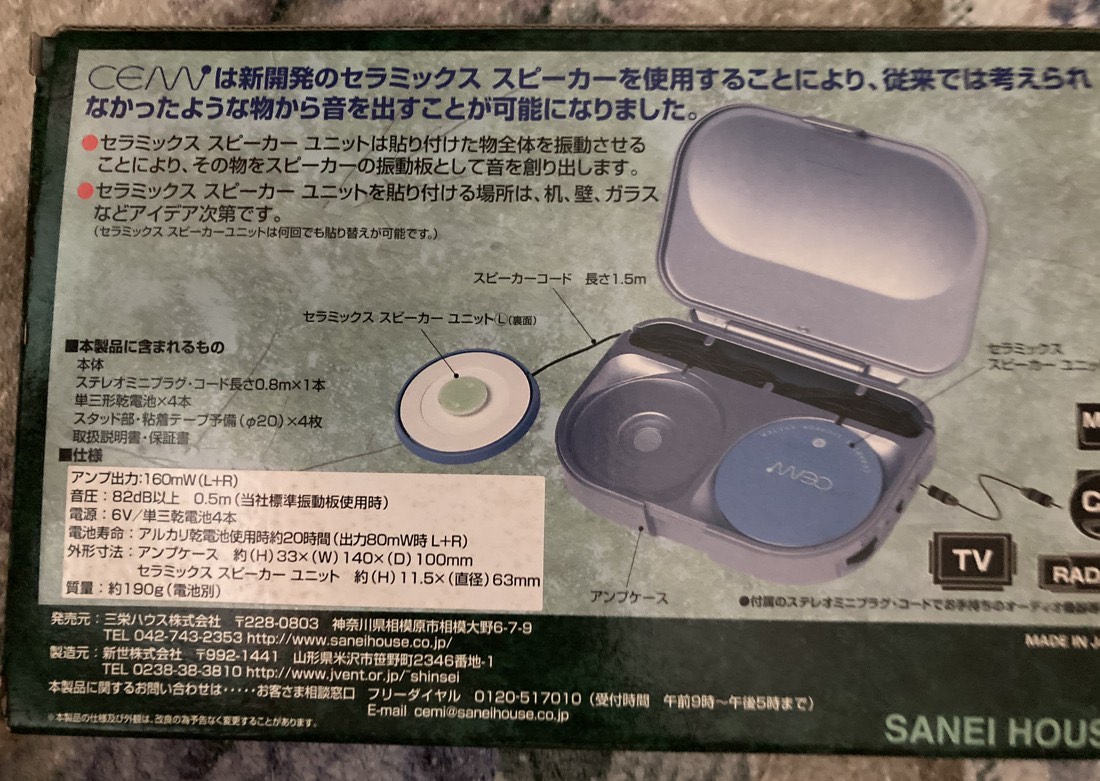
I will be honest. It is not something that works right away. It is not a matter of sticking it on today and hearing a change tomorrow.
What I am doing is close to putting the guitar in an environment where it is being played. If I keep the box ringing, maybe the wood will get used to it a little. That is what I am thinking.
Honestly, I do not really know the result. But I do have the feeling that doing it is better than not doing it, and that the vibration is having a good effect on the guitar.
I did not measure it. If you do it, do it at your own risk.
That is all it is.
The CEMI I bought is not sold now. So I looked for something that could take its place.
A tool with the same mechanism is sold under the name exciter. A Dayton Audio DAEX25 is 5,540 yen for 2 pieces (6,094 yen including tax). That is the price I checked in August 2026.
But you need a separate amplifier. The CEMI had an amplifier inside, and it made sound once you put batteries in. On that one point, the old one was easier.
I have not bought it, so I do not know whether it works.
In the End There Is No Right Answer, But I Can Get Closer
Reproducing that sound completely is probably impossible. The recording environment is different, the guitar is different, the player is different, the era is different.
But when I trust my own ears and fingertips and try one thing after another, there really is a sense of getting closer. When I notice that change in a single note, the distance between me and the guitar gets smaller.
The Gibson J-160E. It is no longer just a reproduction model to me. It has become a partner in the search for my own sound.
The two recordings are up above. One take each, with no practice.


コメント