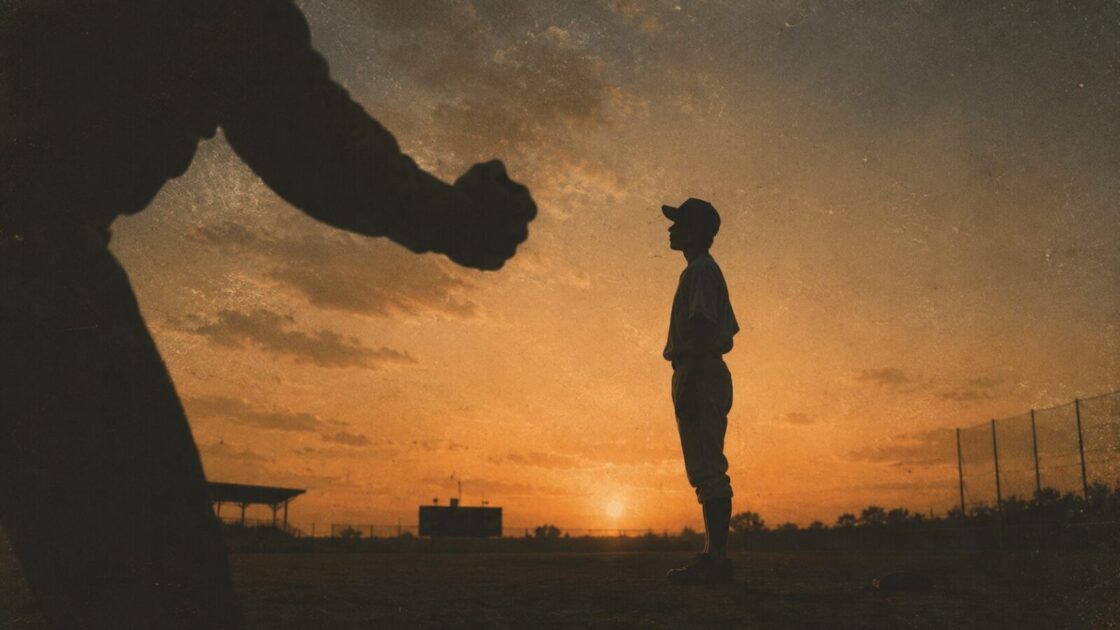
To be honest, I did not plan to listen to the whole press conference. It was a 50-minute press conference, held when Masumi Kuwata became CBO of the Oisix Niigata Albirex Baseball Club.
But before I knew it, I had listened to the end. Masumi Kuwata said the same words again and again.
Science. Balance. Respect.
I did not count, but I think he said them at least 3 times.
When I looked at Wikipedia, there were quite a few stories about Kuwata. Of course, I do not think those stories are the absolute truth. But I also could not believe they were all lies.
He Was a Rookie, So Why Did He Ignore the Custom to Protect His Elbow?
The story that made me stop was from his time as a rookie.
From his first days on the team, he ignored the custom and used ice after pitching. He put protecting his elbow first.
Honestly, doing this as a rookie is hard. If it were me, I would probably read the room and not do it. I could not do it.
But Kuwata did it.
It felt less like courage. It felt like his priorities were different from the start.
At a School Known for Beatings, Why Was He Never Hit?
When I looked further, there were stories from high school too that made me think, maybe he was like this from the start.
He went to PL Gakuen, a high school famous for baseball, where violence and physical punishment were said to be normal. Kuwata is known for never receiving that punishment. It is also said that he once stopped bullying by older students.
He said something like this to the older students: “Why not leave him alone now?”
It seems the younger players called him an angel.
But if I end this by saying he was a kind person, I think that is probably wrong.
Kiyoshi Hashimoto, who later became his teammate on the Giants too, had given up a lot of hits and was crying on the bench. It is said that Kuwata told him this.
“I do not want to do hard practice either. I think, if only I were as tall as Hashi, if only I had a body like Kiyo. For a small guy like me to win, practice is the only way, right?”
No violence. But no lowering the standard.
The words of Atsushi Kataoka also stay with me. When he made a mistake, Kuwata covered for him kindly. But his eyes were not smiling, Kataoka said.
“It would have been easier if he had hit me. Of all the older players, Kuwata was the most frightening.”
I think what made him frightening was not emotion. It was reason.
Why Could I Not Say It Hurt When I Played Baseball?
Reading this far, I felt I understood a little why the story of Kuwata stayed with me.
In junior high school baseball, the first-year students picked up balls. Catching for free batting practice was also the job of the first-year students.
I jammed my fingers all the time. Once, a finger joint would not straighten anymore. I think it was probably broken, but it is still that way.
There was an air where you could not say it hurt. An air like, if you say it, you are finished.
I should never have played baseball. Even now, that thought comes to me sometimes.
I Think Those Were Words That Let You Say It Hurts
The words Kuwata kept repeating at the press conference, science, balance, respect, did not sound like pretty talk to me.
I think those were words that start from the idea that it is fine to say it hurts.
Not ignoring what the body is telling you. Not pushing too hard again and again. Not breaking people.
It was the complete opposite of the baseball I played in junior high school.
Kuwata said he was moved when he saw a handout from Albirex Niigata that laid out their short-term, mid-term, and long-term goals.
To me, it looked less like a way of thinking he learned later, and more like he was only confirming something he had held for a long time.
I do not know who taught him. But maybe he is a person who did not get carried along by his surroundings, and kept choosing, for all these years, not to accept what he felt was wrong.
Honestly, I do not know if Masumi Kuwata is right. I do not know how the world of baseball should be, either.
It is just that his words, which did not waver through 50 minutes, and that air I felt in junior high school, stood in clear contrast inside me.
That is all this story is.
Other things I have written about baseball in Japan:
コメント